



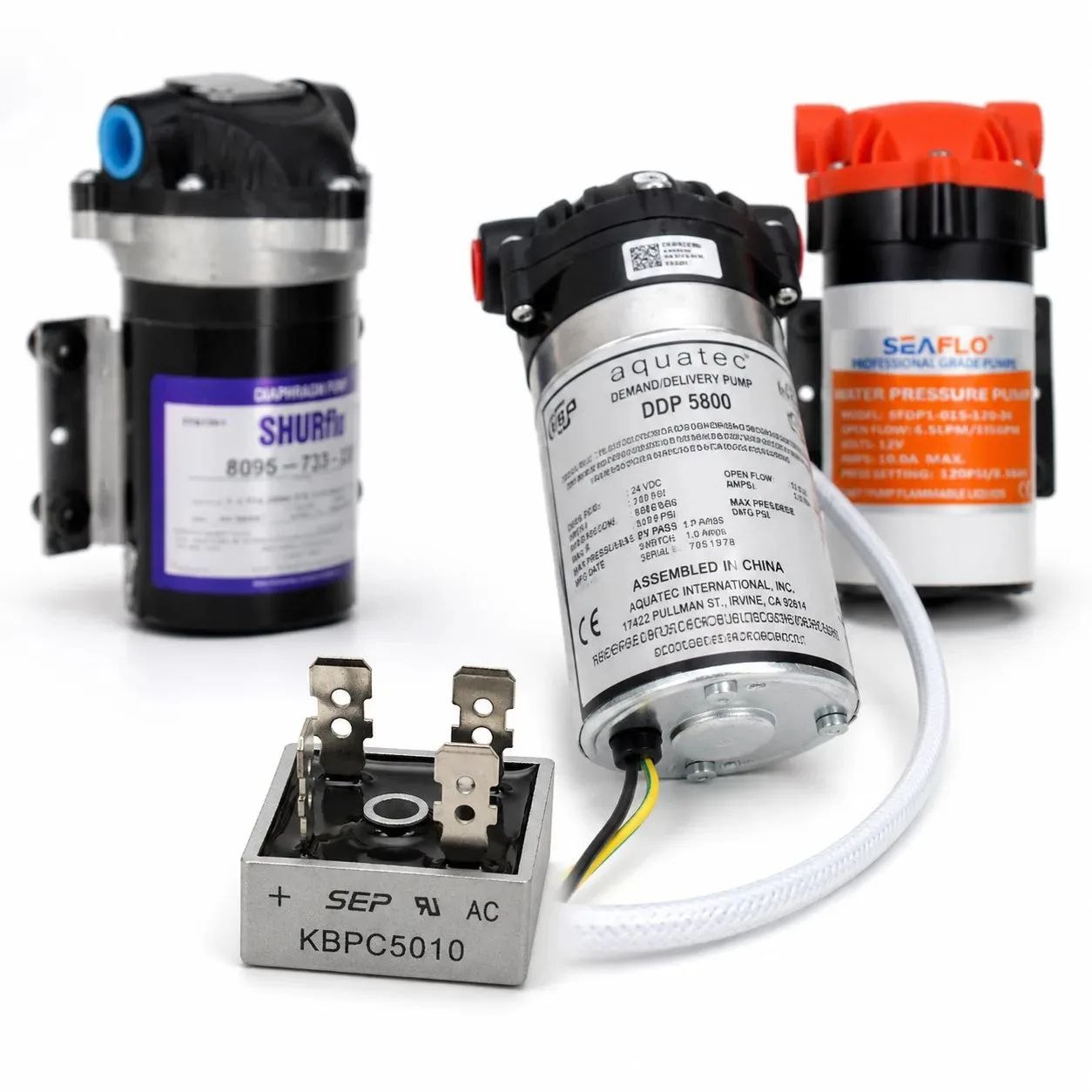
The extractor switches on and the vacuum motor runs, but the circuit breaker trips as soon as the pump is started. This combination of symptoms often indicates a short circuit in the pump circuit, including a failed bridge rectifier. However, a diagnosis cannot be based on one symptom alone: a damaged cable, moisture in the electrical compartment, a faulty switch, or the pump motor itself can produce similar behavior.
This guide explains the purpose of the bridge rectifier, common failure mechanisms, a safe diagnostic approach, and the correct way to power an extractor together with an inline water heater. It is intended for professional cleaning equipment owners in Moscow and throughout Russia.

Safety notice: electrical repairs on 220 V equipment must be performed by a qualified technician. Disconnect the extractor from the mains before inspection. Do not take measurements on exposed live components unless you are trained, authorized, and equipped for this work.
Quick answer: what to do when the pump trips the breaker
- Stop trying to switch the pump on repeatedly.
- Disconnect the extractor and other high-power equipment from the mains.
- Do not replace the circuit breaker with a higher-rated device.
- Check whether the heater and extractor are connected to the same branch circuit.
- Have a technician rule out a short circuit in the cable, switch, pump, and rectifier.
- After the repair, correct the cause of the overload instead of replacing only the failed component.
Why an extractor pump uses a bridge rectifier
Some pump motors operate on rectified voltage. A bridge rectifier converts alternating current into pulsating direct current. It is a compact and inexpensive component, but its electrical rating, cooling, and connection quality affect the reliability of the entire pump assembly.
Rectifier diodes do not fail only because of an undefined “voltage spike.” Excess current, transient overvoltage, overheating, a poor contact, vibration, moisture, or an internal motor fault may all be responsible. The complete circuit must therefore be tested after a rectifier failure.
Why a bridge rectifier may fail
Overloading a shared branch circuit
An extractor, inline water heater, compressor, and other high-power equipment should not be connected to one branch circuit without a load calculation. If their combined power approaches 6 kW or more, an ordinary socket circuit may be overloaded. The permissible load is determined by cable cross-section, installation method, protective device rating, and the electrical design - not by the number of available sockets.
Switching transients
Short transient events may occur when inductive loads are switched on or off. Their effect depends on the circuit design, contact condition, and protective components. Saying that “the breaker tripped and created a spike” is an oversimplification: a breaker protects wiring against overcurrent, while the actual failure mechanism must be established through measurements.
Rectifier overheating
A bridge rectifier dissipates heat. A cramped enclosure, poor thermal contact, or accumulated dirt can increase its temperature. Running a pump during a voltage drop may also increase current draw and heat generation.
A fault inside the pump
Mechanical seizure, worn brushes, damaged windings, or excessive mechanical load can increase current consumption. If only the rectifier is replaced without testing the motor, the new component may fail again.
Moisture and damaged connections
An extractor operates close to water. A leak, condensation, or cleaning chemical inside the electrical compartment can cause leakage current and corrosion. A loose connector may overheat, while damaged insulation can create a short circuit.
Diagnostic table
| Symptom | Possible cause | What the technician checks |
|---|---|---|
| The vacuum motor runs, but the pump trips the breaker | Short circuit in the rectifier, motor, wiring, or switch | Isolates circuit sections and measures resistance and current |
| The pump does not start, but the breaker remains on | Open circuit, switch, brushes, or thermal protection | Checks voltage presence and circuit continuity |
| The pump runs intermittently | Connection, brushes, valves, or air entering the water circuit | Separates electrical diagnosis from hydraulic diagnosis |
| The housing or connector becomes hot | Poor contact, overload, or inadequate heat dissipation | Checks connections and current under load |
| The RCD trips | Earth leakage, moisture, or damaged insulation | Measures insulation resistance and eliminates leaks |
Different sockets do not always mean different circuits
Two sockets in different parts of a room may be connected to the same circuit breaker. To separate the extractor and heater properly, identify their branch circuits at the distribution board using the electrical documentation or with the help of an electrician.
- Read the rated power of each appliance from its nameplate.
- Check the cable cross-section, breaker rating, RCD or RCBO, and protective earth.
- Connect a high-power heater to a separate circuit designed for its load.
- Connect the extractor to another independent circuit.
- Do not use a coiled extension lead, damaged plug, or domestic multi-socket adapter for a high load.
External 50 A / 1000 V bridge rectifier: a safety margin still requires engineering
A bridge rated at 50 A and 1000 V reverse voltage provides a substantial nameplate margin compared with a small original component. The rating alone does not guarantee reliability. Starting current, heat dissipation, mounting method, cooling, component quality, and the circuit of the specific pump must still be considered.
Component example: KBPC5010 50 A / 1000 V bridge rectifier. This link illustrates the component type and does not confirm compatibility with a particular pump.
External mounting can improve access and heat dissipation, but it requires an enclosed housing, reliable insulation, water protection, and strain relief. Exposed terminals must never be left in a wet working area.
This public guide intentionally omits a step-by-step rewiring procedure. Incorrect polarity or insulation on 220 V equipment creates electric shock and fire hazards. A qualified technician must verify the circuit of the specific pump.
Repair the pump or replace it?
| Condition | Reasonable action | Why |
|---|---|---|
| The rectifier has failed, while the motor and insulation test correctly | Professional repair followed by current testing | The serviceable pump can be retained |
| The windings, commutator, or housing are damaged | Replace the pump | Usually more reliable than extensive rebuilding |
| Water and corrosion are present | Eliminate the leak and assess the complete assembly first | A new component will not remove the cause |
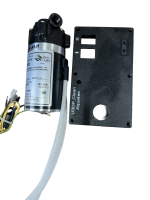
| A compatible Seaflo pump must be replaced quickly | Use a separate pump or a ready-made installation box | Choose between lower component cost and faster installation |
| The cause of repeated failures is unknown | Measure the supply and operating load | Blind replacement may reproduce the same failure |
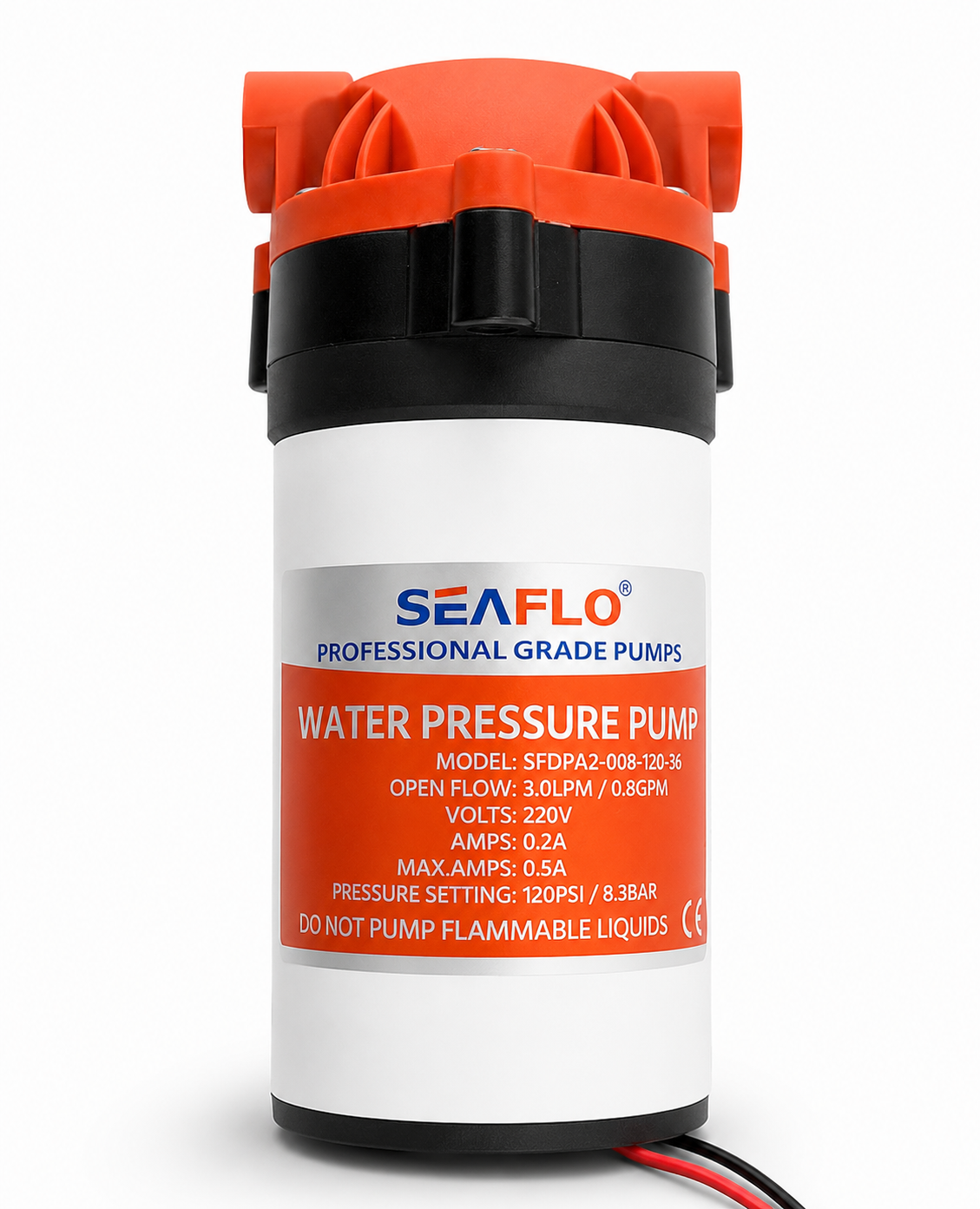
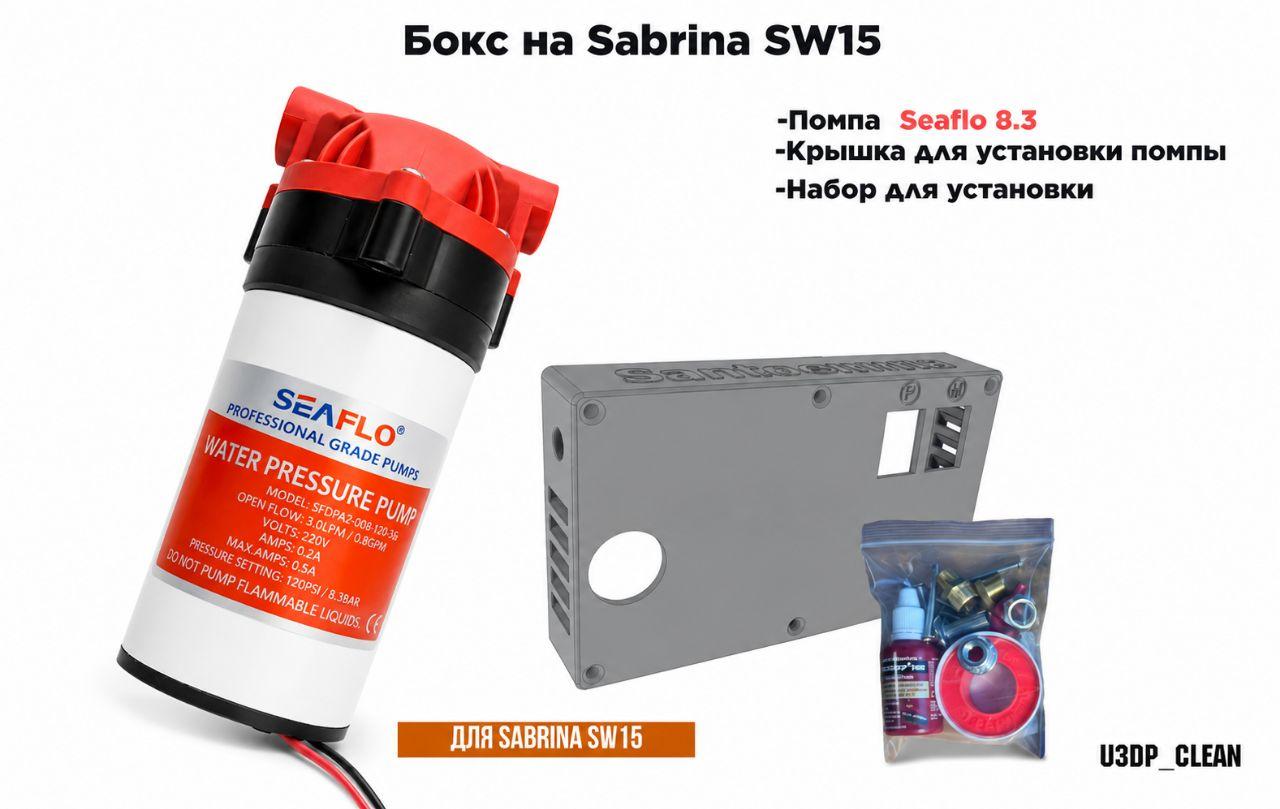
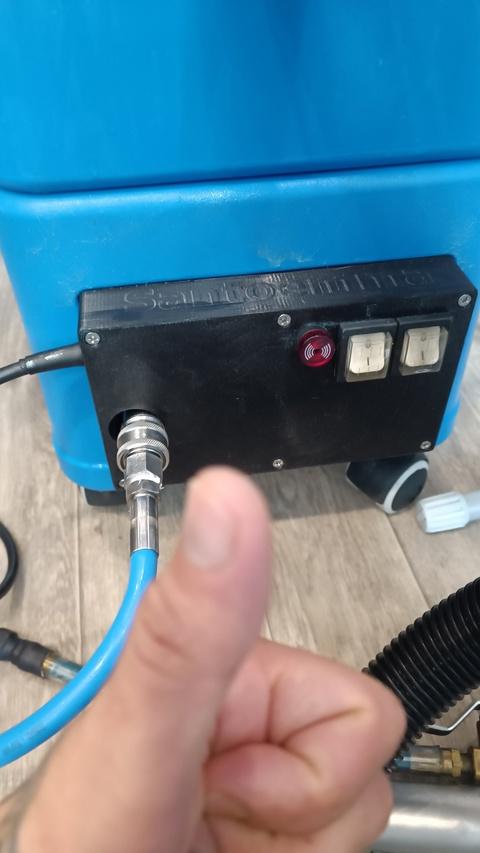
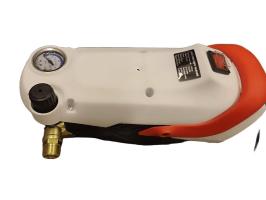
A Seaflo 8.3 bar, 220 V pump is available for compatible machines. If a preassembled solution is required, consider the Mini Sabrina SW15 installation box. Confirm compatibility before purchase.
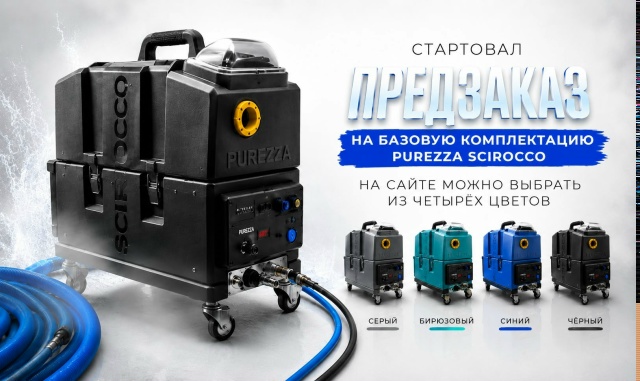
Purezza owners should treat the pump as one serviceable component within the complete extractor. According to the current product description, the Purezza Scirocco with Aquatec is adjusted to 15 bar and delivers 3.8 L/min. A repair or upgrade must not compromise the original safety design.
How to reduce the risk of repeat failure
- Connect the extractor and heater to independent circuits rated for their loads.
- Do not increase the circuit breaker rating without checking the wiring.
- Monitor the condition of plugs, sockets, extension leads, and protective earth.
- Do not operate the machine if it leaks or smells of overheated insulation.
- Periodically measure pump current and check connections for heating under load.
- Flush the hydraulic circuit so the pump does not operate against a blockage.
- Test the protective devices after the repair.
Moscow and other regions of Russia
In Moscow, equipment can usually be delivered for diagnosis more quickly, but the electrical installation at an on-site job may still be unknown. In other regions, shipping time and spare-part availability also matter. Keep the pump model, circuit information, and list of compatible components with the extractor documentation.
Before working at a customer's premises, determine whether independent circuits are available for the extractor and heater. If this cannot be confirmed, do not run both high-power appliances simultaneously without an electrician's assessment.
FAQ
Why does the breaker trip only when the pump is switched on?
The faulty or overloaded branch is energized at that moment. The rectifier, motor, switch, or wiring may be responsible.
Can I install a higher-rated circuit breaker?
Not without a circuit calculation. The breaker protects the cable, and an excessive rating can allow the wiring to overheat.
Is plugging the heater into another socket sufficient?
No. Different sockets may belong to the same branch circuit. A separate circuit with its own protective device is required.
Is a 50 A / 1000 V rectifier guaranteed not to fail?
No. A higher rating does not eliminate overheating, poor contacts, a faulty motor, moisture, or supply problems.
Can I continue working if the breaker stays on after a second attempt?
No. A protective device that has tripped indicates a fault that must be located before the equipment is used again.
Conclusion
A failed bridge rectifier is one possible reason why an extractor pump trips the circuit breaker. A reliable repair begins with checking the motor, wiring, insulation, operating load, and electrical supply - not simply installing a larger rectifier. The extractor and inline heater should be powered from independent circuits designed for their respective loads.
Select a pump, installation kit, or professional extractor: U3DP Clean catalog
Download the PDF safety guide
.png)
.png)
Comments
Недавно столкнулся как раз с такой проблемой — при включении насоса начало выбивать автомат. Жаль, что эта статья не попалась мне раньше, возможно, удалось бы избежать лишних трат и нервов. Всё написано простым и понятным языком. Теперь хотя бы знаю, на что обращать внимание и почему нельзя просто менять сгоревшую деталь, не разобравшись в причине.
Александр, большое спасибо, что поделились своим опытом и высоко оценили статью!
Очень жаль, что вы столкнулись с такой неисправностью насоса экстрактора, но рады, что материал оказался полезным и помог разобраться, почему может выбивать автомат и по какой причине важно искать источник поломки, а не просто менять диодный мост или другие детали.
Именно для этого мы и публикуем статьи по ремонту и обслуживанию экстракторов — чтобы владельцы оборудования могли избежать лишних расходов, простоев и повторных неисправностей. Надеемся, что информация поможет вам в дальнейшей эксплуатации, а ваш экстрактор для химчистки будет работать долго и безотказно.
Спасибо за отзыв! Желаем успешной работы, лёгких заказов и как можно меньше поломок оборудования.